Psoriasis is a chronic skin condition that affects millions of people worldwide. The reddish plaques, scaling, and constant itching lead sufferers to seek solutions that relieve symptoms without further irritating already sensitive skin. aloe vera It has become one of the most consulted natural remedies for this problem, and it is no coincidence: its anti-inflammatory, calming and regenerative properties make it a very valuable complement within the psoriatic skin care routine.
En Ibizaloe We have been growing and processing organic aloe vera in Ibiza for years, and we know well what this plant can — and cannot — do for your skin.
What is psoriasis and why does the skin react this way?
Psoriasis is a chronic autoimmune disease in which the immune system mistakenly attacks skin cells, accelerating their renewal cycle. Under normal conditions, the skin renews itself every 28-30 days. In psoriasis, the immune system attacks the skin cells, accelerating their renewal cycle. psoriatic skinThis process occurs in just 3-7 days, generating an accumulation of dead cells that form the characteristic whitish plaques on a reddish base.
There is no definitive cure, but the symptoms can be well controlled with appropriate treatments and habits that strengthen the skin barrier. This is where aloe vera has much to offer.
Aloe vera properties that benefit psoriatic skin
Aloe vera gel contains over 200 bioactive compounds. For psoriasis, the most relevant are:
- Acemanano: The main polysaccharide of aloe, with anti-inflammatory and immunomodulatory properties that help reduce the inflammatory response in the skin.
- Allantoin: It promotes cell regeneration and softens plaques, reducing flaking.
- Vitamins C and E: Antioxidants that protect the skin from oxidative damage, common in skin with psoriasis.
- Antioxidant enzymes: superoxide dismutase and catalase, which reduce local oxidative stress.
- Deep moisturizing effect: Aloe vera acts as a humectant, attracting water to the surface layers of the skin and reducing the tightness characteristic of plaques.
Several clinical studies have evaluated the topical use of aloe vera creams in patients with plaque psoriasis. The results show a significant reduction in scaling, erythema, and itching compared to placebo, with no relevant side effects.
How to use aloe vera if you have psoriasis
The application method is almost as important as the product quality. These are the guidelines we recommend:
Pure gel directly onto the plates
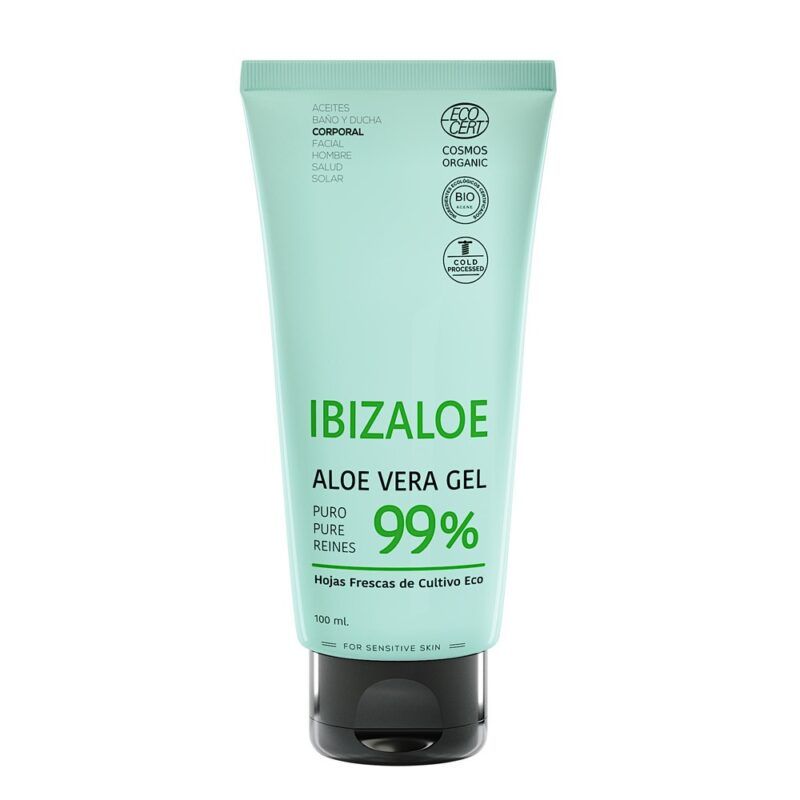
Apply a generous layer of Pure Aloe Vera Gel 99% Apply to the affected areas with clean fingers, using a gentle circular massage. Allow it to absorb without rinsing. You can repeat this 2-4 times a day, especially after bathing when the skin is more receptive.
Combined with moisturizer
For very dry skin or areas like elbows and knees, combine the gel with our Aloe Vera Multipurpose CreamFirst apply the gel, wait 2-3 minutes, then apply the cream to seal in the moisture.
Aloe vera on the scalp
Scalp psoriasis is one of the most common and bothersome locations. Aloe vera gel, applied 20-30 minutes before washing with a gentle massage, reduces visible flaking and relieves itching. With continued use, results are noticeable in 2-4 weeks.
Drinkable aloe vera as a supplement
Some studies suggest that the inflammatory component of psoriasis may also be influenced from within. Drinkable Aloe Vera Juice It provides systemic anti-inflammatory properties and promotes gut health. If you are taking medication, consult your doctor before taking it.
Why the origin of aloe vera matters for psoriasis
Not all aloe vera gels on the market are equally effective. Ibizaloe we cultivate Aloe barbadensis Miller Organically grown in the fields of Ibiza, under a Mediterranean climate with intense sunshine that favors the synthesis of acemannan and other active compounds. The gel is cold-extracted and minimally processed to preserve the integrity of its components, with a concentration of active ingredients far superior to most commercial products.
What aloe vera cannot do
It's important to be honest: Aloe vera does not cure psoriasisWhat it can do is reduce the intensity of symptoms during flare-ups, help space them out with regular use, complement medical treatments without interfering with them, and improve quality of life by reducing itching and daily discomfort. Always use it as a complement to, not a substitute for, the treatment prescribed by your dermatologist.
Frequently asked questions about aloe vera and psoriasis
Can aloe vera eliminate psoriasis?
No. Psoriasis is a chronic autoimmune disease with no definitive cure. Aloe vera helps control symptoms and may help reduce the frequency of flare-ups, but it does not eliminate the disease. It should always be used as a complement to medical treatment.
Is it safe to apply aloe vera directly to plaques?
Yes, pure aloe vera gel is well-tolerated by most skin types, including very sensitive skin. If it's your first time using it, do a small patch test on a healthy area of skin and wait 24 hours to rule out any sensitivity.
How many times a day can I apply it?
You can apply it as often as needed. There are no side effects from frequent use. During active outbreaks, many people apply it three or four times a day with good results.
Does it work for scalp psoriasis?
Yes, it's one of the most highly rated applications. Apply it 20-30 minutes before washing and massage gently. With regular use, it reduces flaking and itching.
Does aloe vera from Ibizaloe Does it contain alcohol or preservatives?
No. Our 99% Pure Gel contains no added alcohol, parabens, or silicones, making it especially suitable for skin with psoriasis or other conditions that require irritant-free products.